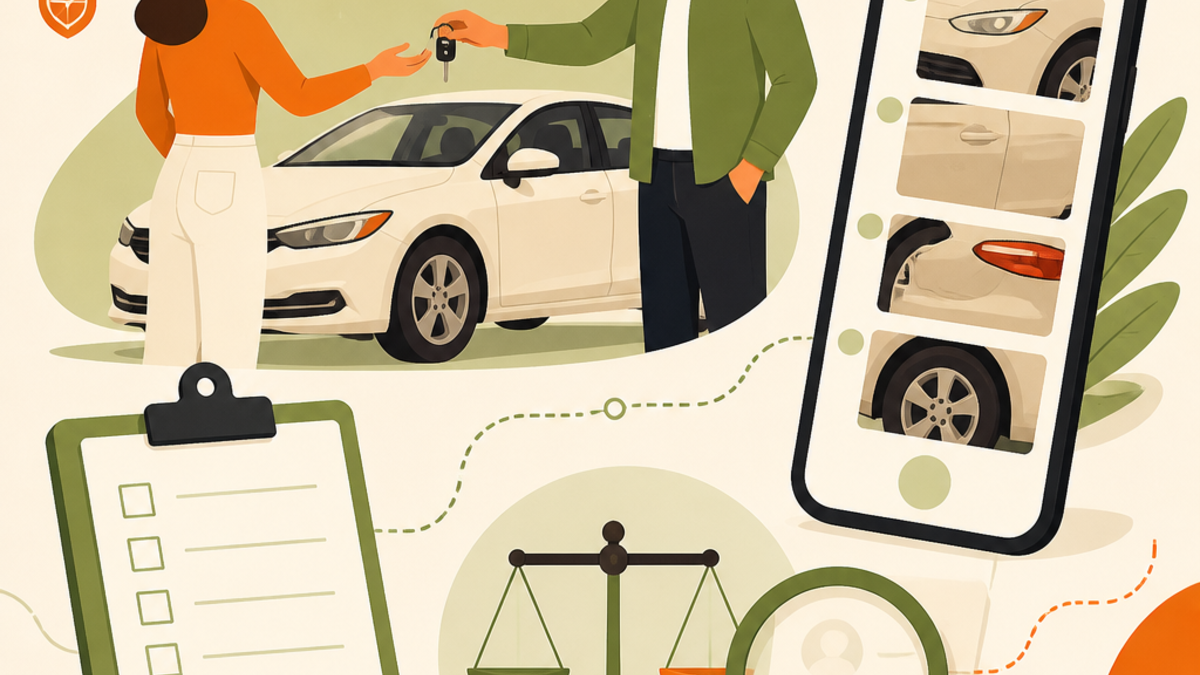
The process is documentation-driven on both sides. A renter who documents the vehicle's condition at pickup and dropoff is in a strong position regardless of what a host later claims -- not because disputes never happen, but because good documentation is exactly what resolves them fairly. This guide walks through what to document, how the claims process typically works, and how to dispute a claim you believe is inaccurate, so you know exactly what to do rather than just hoping it goes fine.
The short version, upfront: photograph the vehicle thoroughly at pickup and again at dropoff, and you've done the single most important thing to protect yourself in this entire process.
Why Pickup Documentation Matters More Than Anything Else
Photos and video of the vehicle's existing condition, taken immediately at pickup, timestamped, from multiple angles, are the foundation of your entire position if a damage claim ever arises. This single habit matters more than any other step in this guide, because it establishes something nothing else can after the fact: what the car actually looked like before you drove it.
Here's why this works the way it does. A damage claim is fundamentally a question of timing -- did this damage exist before the renter's trip, or did it happen during it? Without a documented baseline, that question has no reliable answer, and disputes default toward whoever has evidence. A host filing a claim typically has their own pre-trip documentation (this is standard practice for well-run hosts, covered from the host side in Turo host chargeback protection). If you don't have matching documentation from your side, you're arguing memory against evidence -- a position you don't want to be in.
The good news: this takes about five minutes at pickup and completely changes your position in any later dispute. It's the cheapest insurance available in this entire process.
The Pickup Documentation Checklist
Do this before you drive away, every single time:
- Photograph all exterior panels -- front, rear, both sides, roof if accessible -- in good light.
- Photograph close-up any existing scratches, dents, or marks you notice, however minor.
- Take a continuous video walkaround if possible, since video is harder to dispute than isolated photos and captures more context.
- Photograph the full interior -- seats, dashboard, cargo area, any existing wear or stains.
- Photograph the odometer reading.
- Photograph the fuel gauge.
- Confirm your device's timestamp is accurate, since a photo with no verifiable date is much weaker evidence.
- Do this immediately at handoff, not the night before or after you've already started driving -- timing matters for credibility.
Eight steps, a few minutes, and you're covered for the entire trip.
What Typically Happens When a Host Files a Damage Claim
While specific procedures can change and should be confirmed against Turo's current policies, the general shape of the process typically follows this pattern:
The host reports the issue through the platform within a claim window -- a limited period after the trip during which they remain eligible to file. This isn't something a host can raise informally weeks later; there's a real deadline on their side too.
The host submits documentation supporting their claim -- typically photos or video showing the damage, and ideally their own pre-trip documentation for comparison.
The platform reviews the claim, weighing the evidence submitted. This is exactly where your own pickup and dropoff documentation becomes decisive -- if you have a clear timestamped record and the host's claim doesn't align with it, that discrepancy matters.
A determination is made based on the evidence from both sides. Outcomes depend heavily on documentation quality on both sides, not just on the host's assertion.
Understanding this process from the perspective of how hosts are advised to document (matched before-and-after evidence, reported promptly, kept within the platform) gives you real insight into what actually makes a claim credible -- and, by extension, what makes a dispute against a weak claim likely to succeed.
How to Dispute a Claim You Believe Is Inaccurate
If you receive notice of a damage claim you believe is wrong -- either the damage didn't happen during your trip, or it didn't happen at all -- here's how to respond.
Don't panic or admit fault prematurely. Before you understand the actual claim -- what damage is alleged, where, and what evidence supports it -- don't apologize or accept responsibility reflexively. Review the specifics calmly first.
Pull your own documentation immediately. Your pickup and dropoff photos are your primary evidence. Compare them directly against whatever the host is claiming.
Respond through the platform, with your evidence, promptly. Submit your timestamped photos and video showing the vehicle's condition at pickup and dropoff. If your documentation shows the alleged damage wasn't present when you had the car, or was already present before your trip, that's the core of your dispute.
Be factual and specific, not emotional. State clearly what your documentation shows and why it contradicts the claim. A precise, evidence-based response is more persuasive than a general denial.
Escalate if needed. If the initial resolution doesn't seem right based on the evidence, ask about escalation options within the platform's dispute process.
The entire dispute hinges on evidence. A renter with thorough documentation is arguing from strength; a renter without it is arguing from memory, which is a much weaker position regardless of whether they're actually right.
Worked Scenario One: Thorough Documentation, Successful Dispute
A renter photographs the vehicle completely at pickup -- all panels, interior, odometer, fuel gauge, timestamped -- and does the same at dropoff.
What happens: weeks later, they receive notice of a damage claim for a scratch on a rear panel. Their pickup photos, taken immediately at handoff, clearly show that exact panel already had a similar mark before they ever drove the car. Their dropoff photos confirm nothing changed in that area during their trip.
The dispute: they submit their pickup and dropoff photos directly, pointing to the specific pre-existing mark visible in the pickup documentation.
The outcome: the claim is resolved in the renter's favor, because the timestamped evidence clearly contradicts the claim's premise -- the damage demonstrably predates their trip.
The lesson: this is documentation doing exactly what it exists to do. The renter didn't need to argue, negotiate, or hope for good faith -- their evidence made the correct outcome close to automatic. This is the position you want to be in.
Worked Scenario Two: Inadequate Documentation, a Harder Dispute
A different renter skips pickup photos entirely, planning to "check the car over" visually but not documenting anything.
What happens: they receive a similar damage claim after their trip. They believe the damage was pre-existing, but they have no photos to prove it -- just their recollection.
The dispute: without timestamped evidence, they're left arguing from memory against the host's documentation (if the host has their own pre-trip photos, which many well-run hosts do). Their claim that the damage was already there has no independent evidence supporting it.
The outcome: without contradicting evidence, the process is much harder to navigate in the renter's favor, since there's nothing concrete to weigh against the host's submitted documentation.
The lesson: the difference between these two scenarios isn't whether the renter was actually right -- it's whether they could prove it. This is precisely why the five-minute pickup habit matters so much more than it feels like it should in the moment.
What Protection Typically Covers If Damage Is Legitimately Yours
If damage genuinely occurred during your trip and is your responsibility, what happens next depends on your coverage choice at booking.
Your chosen protection plan. Recall that protection plans come in tiers, with higher tiers costing more per day but reducing your financial responsibility for damage. If you selected a plan with lower personal responsibility, your out-of-pocket exposure for legitimate damage is correspondingly lower. This is exactly why understanding protection tiers before booking matters -- see the Turo renter insurance guide for how these work in detail.
Your personal auto insurance or credit card benefits. Depending on your specific coverage, you may have additional protection that applies, which can reduce what the platform's protection plan needs to cover. Confirm this with your own insurer or card issuer before you need it, not after.
The deductible on your chosen tier. Lower-cost protection tiers typically carry higher deductibles -- the amount you're responsible for before coverage applies. Know your specific tier's deductible before you're facing a real claim, since the number matters a great deal in the moment.
If damage is legitimately your responsibility, the process is generally about applying your coverage correctly rather than disputing the claim itself -- a different, more straightforward path than contesting an inaccurate claim.
Realistic Timelines for Resolution
Specific timelines vary and should be confirmed against Turo's current policies, since platform processes can change. That said, a few general patterns are worth knowing:
Claims typically need to be filed within a defined window after the trip -- not indefinitely open. This protects renters too, since it means a claim can't surface months later with no clear basis.
Review and resolution takes real time, not instant. Submitting strong evidence promptly on your side generally supports a faster, cleaner resolution than a slow or incomplete response.
Respond promptly if you're disputing. Delaying your response doesn't help your position and can complicate the timeline. The moment you're notified of a claim you disagree with, pull your documentation and respond.
Patience is part of this process, but so is promptness on your end -- the two aren't in tension. Respond quickly with your evidence, then allow the platform's review process the time it needs.
Common Mistakes Renters Make
Not documenting the vehicle at pickup at all. The single most consequential mistake, illustrated directly in scenario two above. Five minutes at pickup is the entire difference between a strong and a weak position later.
Assuming a photo taken well after arriving somewhere is equally useful as one taken at pickup. Timing matters. A photo taken hours after pickup, once you've already been driving, leaves a window during which the disputed damage could theoretically have occurred on your watch. Photograph immediately at handoff, before you drive anywhere.
Panicking and admitting fault prematurely. Before understanding the actual specifics of a claim -- what's alleged, where, with what evidence -- don't apologize or accept responsibility reflexively. Review calmly, check your own documentation, and respond factually.
Not documenting at dropoff too. Pickup documentation alone doesn't confirm the vehicle's condition when you returned it. Both ends of the trip need the same documentation discipline.
Communicating outside the platform. Keep all communication about a claim within Turo's official channels, so there's a clear record. Informal conversations with a host, however well-intentioned, don't create the documented trail you need if things escalate.
Frequently Asked Questions
Should I document the vehicle at dropoff, not just pickup?
Yes, absolutely -- both ends of the trip need the same documentation discipline. Pickup photos establish the starting condition; dropoff photos establish what condition you returned it in. Together, they form a complete record that either confirms nothing changed or clearly shows what did, protecting you regardless of what's claimed afterward.
What if I disagree with how a claim was resolved and want to escalate?
Ask the platform directly about escalation options within their dispute process -- there's typically a path to request further review if you believe the initial resolution didn't properly account for your evidence. Confirm the current escalation process directly with Turo, since specific procedures can change, and provide any additional evidence you have that wasn't fully considered.
How long do I have to respond if a host files a claim against me?
This varies and you should confirm the specific timeframe when you're notified, but the practical guidance is the same regardless of the exact window: respond as promptly as possible with your documentation. Don't wait, and don't assume a delayed response won't affect your position.
Does having a higher protection plan tier mean I don't need to document the vehicle?
No -- documentation matters regardless of your protection tier, because it determines whether a claim is valid in the first place, not just how much you owe if it is. Even with the highest protection tier, thorough documentation is what lets you successfully dispute a claim for damage you didn't cause, rather than accepting responsibility for something you're not actually responsible for.
What if the host's claim includes photos that seem to show damage I don't remember?
Compare their photos carefully against your own pickup and dropoff documentation, checking specifically whether the alleged damage is visible (or absent) in your timestamped record. If your documentation contradicts theirs, that discrepancy is the core of a legitimate dispute. If you genuinely have no documentation to compare against, this is exactly the scenario the pickup checklist exists to prevent going forward.
Can a damage claim be filed indefinitely after my trip ends?
No -- claims typically need to be filed within a defined window after the trip, not indefinitely. This protects renters from claims surfacing with no clear timeline or basis. Confirm the current specific window against Turo's policies, since it's a detail worth knowing before you ever need it.
Does my age or experience level affect how a damage claim is handled?
Not directly -- the claims process itself evaluates evidence, not renter demographics. That said, Turo renter age requirements can affect which protection tiers or vehicles are available to you at booking, which indirectly affects your coverage options if a legitimate claim does arise. The dispute process itself, though, comes down to documentation on both sides.
The Takeaway
The Turo renter damage claims process is fundamentally documentation-driven, and the renter who photographs the vehicle thoroughly at pickup and dropoff -- timestamped, from multiple angles, immediately at handoff -- is in a strong position regardless of what's later claimed. Follow the checklist every single time, respond promptly and factually if a claim seems inaccurate, and don't admit fault before you've actually reviewed the evidence on both sides.
One thing worth knowing as you build this habit: the hosts who document their trips just as thoroughly on their end are the ones this whole process protects fairly, for both sides. If you're curious how that documentation discipline works from the host's perspective, our Turo fleet management software coverage is where the host side of SharingShell begins.